
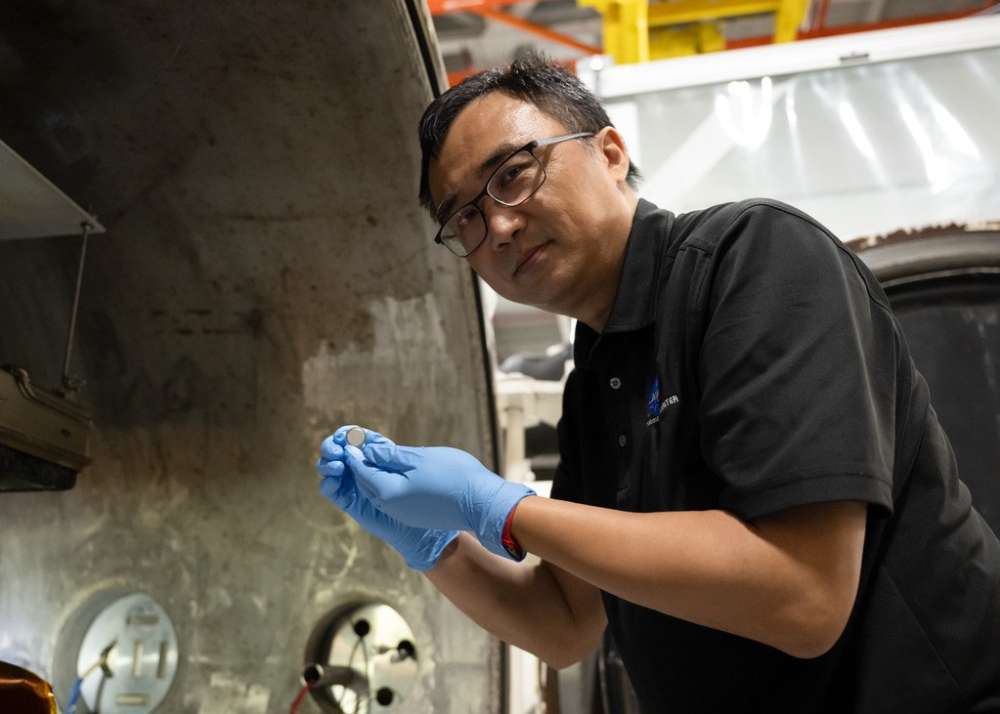
NASA researchers are developing solid-state batteries to help future lunar equipment survive extreme temperatures. The project, called SPEARS, could support rovers, scientific instruments, and astronauts’ emergency power supplies.
Unlike conventional batteries that use liquid electrolytes, these experimental cells use solid materials. Researchers are investigating whether this approach can improve reliability in the Moon’s demanding environment.
Recent laboratory tests showed small prototype cells operating at temperatures from minus 60 to 80 degrees Celsius. They also worked at minus 80 degrees Celsius, although performance declined.
An important distinction is that surviving extreme cold does not mean producing electricity at that temperature. The batteries endured exposure to minus 170 degrees Celsius, but would need warming before operating again.
That capability could eventually reduce the energy and equipment needed to keep batteries continuously warm, potentially making lunar systems lighter and more efficient.
The technology remains under development. Further engineering and spaceflight testing are needed before it can support lunar missions.
Beyond space exploration, researchers see potential applications in vehicles, drones, and portable electronics. For now, SPEARS represents a promising research step toward batteries designed for environments where ordinary power systems struggle.