
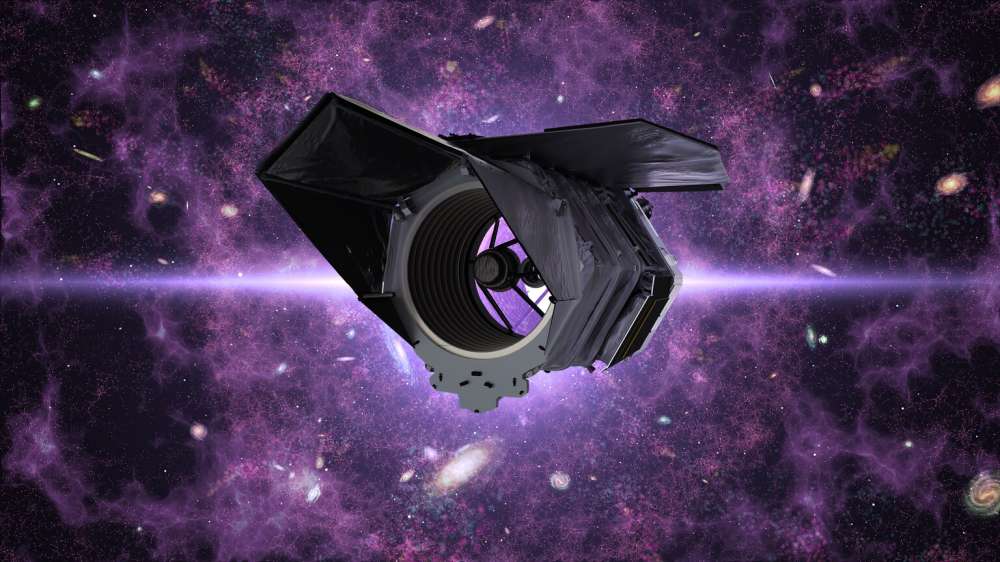
A new generation of space technology is preparing to change how scientists explore the cosmos. NASA’s Nancy Grace Roman Space Telescope has been recognized among TIME’s Best Inventions of 2026, highlighting an observatory designed to investigate distant planets and some of the universe’s deepest mysteries.
Roman combines infrared observations with an exceptionally broad view of space. Its field of view will cover at least 100 times the area of Hubble’s, allowing researchers to survey large regions of the sky while gathering detailed information about the objects within them. Over its lifetime, the telescope could measure light from a billion galaxies.
This capability matters because understanding the universe requires more than studying individual stars and planets. Scientists must also examine patterns across enormous populations of galaxies. Roman will help researchers investigate dark matter and dark energy, two major mysteries shaping our understanding of how the universe behaves and evolves.
The telescope will also study planets outside our solar system. One of its instruments is designed to block the overwhelming light of stars, making nearby planets and disks of planet-forming material easier to observe. This technology could help advance future efforts to study distant worlds.
Roman also demonstrates the growing connection between scientific discovery and data. Its surveys are expected to generate vast amounts of information, giving researchers opportunities to explore questions beyond the mission’s original objectives. Each observation could become part of a larger investigation into the history and structure of the universe.
Launched on August 30, 2026, Roman is undergoing testing and calibration during its journey toward its operating orbit. Its first images are expected in early 2027. The discoveries scientists hope to make remain ahead, as the team prepares its instruments for scientific observations.
At a time when technology is often associated with smartphones, social media, and artificial intelligence, Roman offers a wider perspective. Innovation also means building instruments that can look deeper into space, gather evidence from distant galaxies, and help humanity understand its place in the universe.