
Artificial intelligence is entering the concert hall as a technology designed to interact with human performers. A new orchestral work by MIT composer Tod Machover explores how live AI can create connections between musicians while expanding the sounds audiences hear.
The composition, already and not yet, is scheduled for its world premiere with the Boston Symphony Orchestra on October 22, followed by performances on October 23 and 24. Kent Nagano will conduct the programme at Boston’s Symphony Hall.
The performances anchor the orchestra’s “Technology and Our Humanity” events, which examine how emerging tools are changing creativity and human experience. Alongside the concerts, the programme includes conversations about the relationship between music, technology, and society.
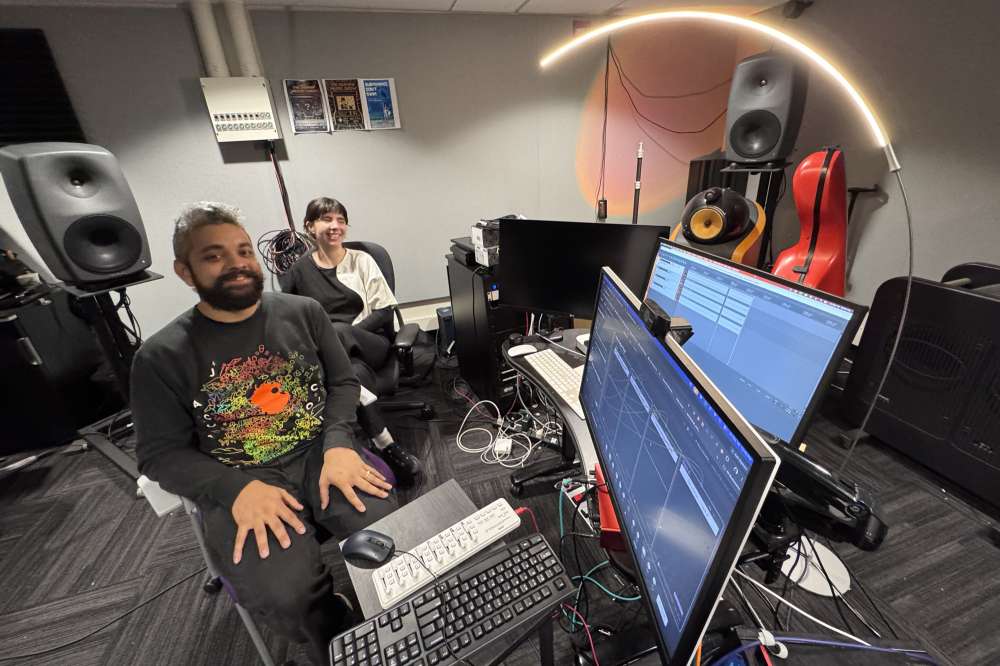
The project’s live AI system was designed by MIT Media Lab doctoral student Manaswi Mishra. Fellow doctoral student Ana Schon will handle the audio mixing during performances. The system is intended to interact with musicians and create unexpected relationships across the orchestra.
The premiere also forms part of the Media Lab’s 40th-anniversary celebrations. Related events include a discussion between Machover and composer George Lewis, a panel reflecting on four decades of music research, and a presentation by artist Holly Herndon about AI as a creative medium.
Within the composition, technology serves a specific artistic purpose. The three movements explore disruption, reflection, and renewed cooperation. Machover uses the orchestra as a way to consider how individuals and groups relate to one another.
In the second movement, the AI tools aim to emphasize individual performers. In the third, the system is intended to build connections across the ensemble, with additional loudspeakers extending the sound into the hall.
Machover describes current AI systems as particularly capable of finding significant patterns in audio. He also acknowledges their limits: detecting patterns is different from understanding a performance’s musical or expressive meaning.
As of October 21, these remain the creators’ descriptions of the work and its intended effects. The premiere has not yet taken place, so audience reactions and assessments of the live result are still ahead.
The experiment raises a useful question about the future of creative technology: what becomes possible when software responds to performers during the act of making music?
A recorded track produces a fixed sequence of sounds. An interactive system introduces another relationship for musicians to navigate. Its value depends on whether that relationship supports expression, rewards careful listening, and gives performers meaningful choices.
For audiences, the most revealing test may be the music itself. Technical novelty can attract attention, but the lasting achievement would be a performance whose emotional and artistic impact makes the technology worth using.